
Fragmentique
Susan L. Marshall’s Signature Technique
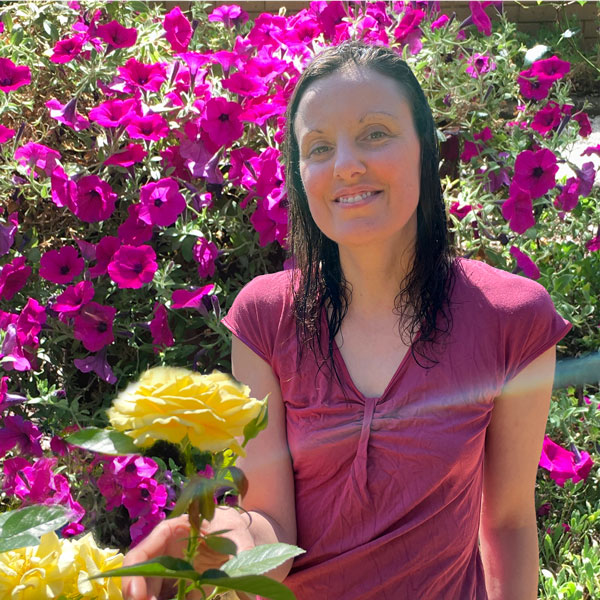
“Harnessing winter’s energy I drift,
my free wild woman’s soul,
alight with day’s deep desires.” 1
Above is a quote from my poem: Wild Woman Soul in my best-selling poetry collection: Wild Soul: Contemporary Classical Winter Poetry. In winter and all other seasons, I face the natural outdoors and attune myself to its myriad of energies. Time does not feel restrictive, yet frees me and enables me to focus on states of being and presence. I harness the elements and seasons, firstly attuning myself to the most basic form of light energy.
If I stand amongst the dappled hues of natural light outdoors, I can absorb its evocative presence. Streaks of blue, purple or red, accompanied by dancing dots of white that project their crystal-like glows, prism-like and far reaching. Dusk is my favourite time of day to witness this ethereal presence of light and to feel the weight of its being, as it carries the wisdom of the day.
“I could follow dusk always,
brushing it with stripes and dots
of simple beginnings
for us to share in time.” 2
I see fragmentation in natural light, which may exist as an intense power, a soft glow or a deep fragility. Neither of these are positive or negative, as I do not view my perception of light as definitive. The above quote from my poem: Dusk Heart in my best-selling poetry collection: Bare Spirit: The Selected Poems of Susan Marshall, demonstrates that dusk as both a source of light and a time period, can be transformed into simple beginnings via the brushing of stripes and dots. Light (even at a time of day like dusk), is the source of my beginning of Fragmentique, my artistic technique. Metaphysically, I believe that light is a carrier of being in the rich array of forms as it chooses to present itself. I consider that light is deeply connected to the soul of its perceiver and provides a deep, personal sense of absorption and connection with energies and aspects of the natural world. When I attune myself to fragments of light and the way it shines on world aspects, I am able to use Fragmentique to shape being.
Aristotle once stated that: “The essence, i.e. the substantial reality, no one has expressed distinctly.” 3 His observation is significant in metaphysical philosophy, as it draws our attention to the importance of recognising what it is to be. As a first principle, a beginning, to our creations of art in its diverse forms, we must first understand what we see and appreciate its raw presence, as fractured as it is, in time and space,
for it to carry any purposeful meaning.
Martin Heidegger, the philosopher of phenomenology and existentialism, is notably famous for critiquing the world of the aesthetic and to question its very focus and purpose in life itself. He noted that beauty in aesthetic is one of the key essential phenomena that he believed interlocked with science, technology, culture and the decline of the divine, to express directions that our contemporary world continues to move and to build its own history.4 Heidegger referred to such trajectory of movement as a form of subjectivism in human nature and argued that it was used as a way to gain mastery and/or complete control over objective reality that we are faced with. 5
I will not deny the fact that we as humans, can be subjective in our views of reality. I raise an issue in Heidegger’s argument, in the way that it derives from the Cartesian view of an object (including in Descartes work), as being detached and distanced from its observer and so therefore it becomes
external to a subjective view.6 This poses the idea that the object is somewhat definitive and inflexible in its nature and I note, can stand in opposition
to the personal interpretations that may be presented of it by its observer.
Metaphysically, I draw upon Aristotle’s statement of being qua being 7 and its continued, vital connective importance in our rapidly paced world. I invite us to continue an appreciation for the virtue of the very state of being in our world, in relation to its very existence. We can continue to focus on the universal principles, essences and substances of objects, aspects or elements of the world, rather than only their specific properties. We may begin with a universal understanding of how such presences be. From there, we can extend our understandings, beyond our physical realm, to venture into a deeper understanding of why such presences exist, through being and how we connect with them on a deeper emotional and/or spiritual plain.
In my authorship and illustration work, ontology is important to me, as it allows me to consider the deeper, internal connections that we build as humans with our world. Metaphysical philosophy allows me to delve deeper into those first causes and principles, to understand that the logic of what I see can be transcended into an experience that belongs to the carrier of that moment and therefore unravels their journey. If I refer to my connection with light once more, I have a physical and sensational response to the way that light fractures may bend, blur or glow (among other presentations). What light shines upon, helps me to attune myself to and define its visibility and meaning, in search of a greater truth. This is the core purpose of Fragmentique: to attune myself to the fractured light as the beginning of mystery. In turn, the light leads me to seek the deeper truths that it unravels through my visions and connections.
“The land of Maren my island,
calls to me in my fretful sleep.
Like dancing ribbons of light,
it winds its memories around
my starved, yearning torso,
tearing at my aching heart.” 8
My profound beliefs of light can be unravelled deeply, as demonstrated in the above quote spoken by Doris, in my publication: All the Hope We Carry. In this dramatic literature publication, I use my Fragmentique technique to reveal the truth of light as a source of faith, hope and vision. It is an aspect of the world that is carried by Doris, Claire and Samuel, in ways that reveal their emotional states, fragility and determinations to survive a devastating war.9 Light as a being, far transcends its logical definition, it permeates the conscience of the reader, enabling them to experience, first hand, the significant impacts of the way it presents itself and works towards healing.
Why light? It brings life, vibrancy and sight, therefore the beginnings of perception and connection. It proudly displays other energies (kinetic, mechanical, etc.) in the way it glows, offering fractured views of the world that mesmerise me and provide deep connection. In these moments, I am nurturing my wellbeing and finding that connection between my physical and mental realms. I am discovering my balance between doing and being.
The work that I share with our global readership, whether that be via my writing etudes or professional publications, are designed for a wide ranging, international audience. Every day I feel blessed that my deep connections with nature and its energies, have enabled me to produce art that helps readers to connect with every day moments in new ways. I have come to realise that this rare, innate gift I have, has a greater purpose. To explain this further, I take a moment to appreciate the dichotomy between two important views of life. On the one hand, we have the Temple of Doing, which universally, we can agree, focuses on our very actions and productivity in the world and how we may perform tasks. It can create a task oriented mind set, and possibly lead to stress, if we do not complete work on time or meet the demands of our busy world.
With my interests in metaphysical philosophy, I aim to help our Readers become more aware of the Temple of Being, which is a cherished belief amongst many religions and cultures around the world. It is up to us to nurture our very beings, to take care of ourselves and to realise that our very presence and connections with our world are vital. Attunement with our own beings and our attempts to preserve and nurture their essential states of existence, are core foci of my written publications.
“Exhaling, my breath is strong, trekking an age of light, which glows dimly in the distance. Light that bounces across the earth, flashing images of familiar, warm faces, tallow candles, silk and red gum trees. Moments of precious heritage that should be treasured and prolonged.” 10
In the above quote, Private Detective Adira Cazon, in my metaphysical mystery, Adira and the Dark Horse, is a detective who fights at all costs, to preserve her own Temple of Being and its truths, extending her guidance to protect the presence and integrity of Girl and a pleading people. She is a unique detective that belongs to not one single religion or culture, yet rather journeys across her own plain of Romantic spirit.11
“As sea water sprayed against her arms,
Princess Zyra stood tall and brave.
Sand seeping between her fingers,
she met the gaze of the full moon.” 12
In the above quote from my children’s metaphysical myth: Princess Zyra’s Lost Storm: An Australian Childhood Myth, young Princess Zyra bravely faces her arid land, beginning with the assistance of the glowing light of the full moon. As she builds her own cosmos, called Sea Castle, she begins to realise that her unique, mystical connection with the cosmos is also helping her to develop and nurture her very own Temple of Being, which reflects itself in unique ways in her world and manifests into a moment of self actualisation.13 I am drawn to the beauty and mystery of what it is to be and nature is always my first, waking steps in finding those mysterious aspects to help shape the being, presence and spirits of my characters.
I declare that for myself, valuing my Temple of Being involves me attuning myself to my Romantic spirit. Nature is vast, beautiful, life-giving, evocative, healing and ever-changing. Its array of wondrous settings are places of deep inspiration for a Romantic wanderer like me. When in nature, I have learned to pay close attention to the wondrous detail around me, down to its finite detail. I have an ability to attune myself to the heightened energy of the moments I am in and to flesh them out for presence, meaning and existence.
I find it also helps to listen, to the world and atmosphere around me; to attune myself to its rhythm; immerse myself in its deeper states … therein lies its profound meaning and beauty. I love unravelling the journeys of the Romantic spirit through writing, theatre and art.
We can learn to value our own Romantic individualism, emotions, connections with nature and experiences. This in turn can lead us to learning to care for our beings. We must find balance also, in our performative actions, not eliminating our Temple of Doing, yet learning to appreciate that our very actions and productivity can shape who we are at a larger and even more personal scale. This is tricky, in a very busy and over saturated world,
yet very important for our own growth.
As a contemporary metaphysical literature author, my use of my signature Fragmentique, involves me drawing from my deep connections with the fragments of light and aspects of nature that it illuminates (eg. leaves, colours, light fall, feathers, raindrops, etc.) and their energies, to create a rich palette that I, for example: sort, spilt, blend, blur, dot, streak, mix, dab, etch and attune myself to.
“The autumn leaves remind me of my own faded memories.
the leaves hold their own precious stories,
which drift about in the wind,
find a new place to settle
and continue to exist.” 14
I love to watch my worlds, characters, atmospheres, moments and any states of being grow as I engage with my technique. It began its fruition as I worked on Fleur of Yesterday, with an example demonstrated in the above quote from the publication, where I use the metaphor of autumn leaf fall to represent fracturing of memory. I engaged with the fragmented existences of Fleur, the Carnation flower, human memory, yesterday and love, nurturing their states of being.
My signature technique, Fragmentique, exists throughout all my existing publications, including those yet to come. I look forward to sharing more about my journey with this technique in my writing with Readers in the future as I create new works.
Thank you for joining us on our journey here at Story Playscapes.
Susan L. Marshall
13 March, 2026.
ENDNOTES
1. Marshall, Susan L. (2025): Wild Woman Soul in Wild Soul: Contemporary Classical Winter Poetry. Story Playscapes, Melbourne, Australia.
2. Marshall, Susan L. (2024): Dusk Heart in Bare Spirit: The Selected Poems of Susan Marshall. Story Playscapes, Melbourne, Australia.
3. Aristotle (350 BC) Metaphysics (Book 1: Alpha). William David Ross (Trans. ed). Oxford: Clarendon Press, 1924.
4, 5 & 6. Stanford Encyclopedia of Philosophy Archive (n.d.) Heidegger’s Aesthetics. Accessed here:
7. Aristotle (350 BC) Metaphysics (Book 1: Alpha). William David Ross (Trans. ed). Oxford: Clarendon Press, 1924.
8 & 9. Marshall, Susan L. (2023): All the Hope We Carry. Story Playscapes, Melbourne, Australia.
10 & 11. Marshall, Susan L. (2024): Adira and the Dark Horse. An Adira Cazon Literary Mystery: Book 1. Story Playscapes, Melbourne, Australia.
12 & 13. Marshall, Susan L. (2026): Princess Zyra’s Lost Storm: An Australian Childhood Myth. Story Playscapes, Melbourne, Australia.
14. Marshall, Susan L. (2023): Fleur of Yesterday. Story Playscapes, Melbourne, Australia.